
History and Culture
Why Understanding the Cold War Changes the Way You See Berlin
Berlin’s most powerful landmarks are not isolated attractions. They are fragments of one story - a city divided by ideology, shaped by fear, and remade by human courage.
Mosam Shah · 15 March 2026 · 6 min read
Berlin is an easy city to look at and a difficult city to read. You can photograph the Brandenburg Gate, walk past a surviving stretch of the Wall, pause at Checkpoint Charlie and explore the colourful murals of the East Side Gallery. But without the Cold War, these places remain separate sights. Once you understand the conflict, they begin to connect. Streets become former borders. Empty spaces acquire meaning. A line of cobblestones under your feet becomes the trace of a barrier that once decided who could work, travel, fall in love or see their family. The Cold War does not merely add history to Berlin. It changes the city you see.
Berlin was not simply divided. It became the world in miniature.
After the Second World War, Germany was divided among the victorious Allied powers. By 1949, two German states had emerged: democratic West Germany and communist East Germany. Berlin, although located deep inside East Germany, was divided too. That made West Berlin an extraordinary place: a Western enclave surrounded by a Soviet-aligned state. Here, two competing visions of the future faced one another at street level. The Cold War’s great abstractions - democracy and communism, freedom and control, capitalism and state planning - were no longer ideas on a map. They shaped shops, schools, housing, newspapers and the possibility of movement. This is why Berlin mattered so intensely. It was a centre of espionage, a propaganda battleground and, for years, an escape route from East to West. Every confrontation in the city carried the fear that a local incident could become a global catastrophe. At Checkpoint Charlie in October 1961, American and Soviet tanks stood facing one another for roughly 16 hours. Today, the crossing can feel theatrical, crowded with signs, photographs and souvenir shops. Knowing what happened there changes the atmosphere. You are no longer looking at a famous checkpoint. You are standing where armed superpowers came dangerously close to turning tension into war.
The Wall ran through ordinary life
The Berlin Wall is often imagined as one long concrete structure. In reality, it became an elaborate border system of walls, watchtowers, patrol roads, floodlights and the exposed ground known as the death strip. Its power, however, did not come from concrete alone. It came from the way it entered daily life. On 13 August 1961, Berliners woke to barbed wire across streets, severed tram lines and armed guards blocking familiar routes. At Bernauer Strasse, the buildings stood in East Berlin while the pavement below belonged to West Berlin. Residents called to relatives from windows. Some jumped into rescue sheets held by West Berlin firefighters. Authorities soon bricked up the windows, emptied the buildings and eventually demolished them. That history changes how you walk through Bernauer Strasse today. The open ground no longer feels empty. It holds the outline of homes, interrupted routines and relationships divided overnight. The Wall becomes less a political monument and more a collection of missed birthdays, broken romances, cautious letters and people visible to one another but unable to meet.
It also changes what freedom means
The story of Tunnel 29 makes the idea of freedom almost physical. In 1962, a group of young escape helpers dug from a disused factory site in West Berlin beneath the border to a cellar in East Berlin. The passage was narrow, wet and unstable. Its builders worked while fearing collapse, flooding and discovery. Communication with those who hoped to escape had to be indirect because letters could be opened, calls monitored and acquaintances recruited as Stasi informers. On 14 and 15 September, 29 people crawled through the tunnel into West Berlin. They emerged muddy, exhausted and shaken. The sky looked the same on both sides; the difference was that they could now decide where to walk next. After learning this story, Berlin’s underground spaces feel different. Courage is no longer found only in speeches or public demonstrations. Sometimes it is a student digging after class. Sometimes it is a messenger carrying a carefully coded instruction. Sometimes it is a parent entering a dark passage with a child, not knowing what waits at the other end.
The Cold War becomes human
Large histories often reduce people to numbers. Berlin resists that simplification. In August 1962, 18-year-old Peter Fechter attempted to escape near Checkpoint Charlie. He was shot and fell on the eastern side of the Wall. For almost an hour, he cried for help while people watched from both sides. West Berlin police could not cross; East German guards did not rescue him in time. His death, witnessed and photographed, revealed the human cost of a border built to contain an entire population. Yet life in East Berlin should not be flattened into continuous visible crisis. People worked, married, raised children and celebrated birthdays. Employment and basic services brought a degree of predictability. At the same time, travel was restricted, goods were limited, education carried ideological messaging and privacy could never be assumed. The Stasi’s power lay partly in uncertainty: a neighbour, colleague or friend might be reporting a careless remark. Holding both truths matters. It allows you to see East German life not as a caricature, but as ordinary humanity adapting to an extraordinary system of control.
Then, almost suddenly, fear lost its authority
By 1989, the political structure supporting the Wall was weakening. East Germans were leaving through other parts of Eastern Europe, while peaceful demonstrations demanded mobility, dignity and voice. On 9 November, a confused announcement about new travel regulations was broadcast live. When an official suggested that the rules applied immediately, crowds gathered at Berlin’s checkpoints. Guards had no clear instructions. Eventually, the gates opened. The concrete had not disappeared, but its authority had. Families crossed. Strangers embraced. Champagne appeared. People climbed onto the Wall and struck it with hammers. Understanding the years before that night makes the celebration more than a famous piece of television footage. It becomes the release of pressure accumulated over 28 years - the return of movement, contact and choice.
You begin to see the Berlin that came after
The Cold War explains not only Berlin’s scars, but also its character today. Reunification did not erase the divide overnight. The city had to reconnect transport systems, institutions, neighbourhoods and memories. It also had to decide what to preserve, what to rebuild and how to live with spaces created by absence. That unfinished process is part of Berlin’s energy. Former border zones became memorials, parks and creative spaces. A structure designed to silence movement became a canvas for expression. A city once organised around restriction developed a fierce attachment to experimentation and personal freedom. Without context, Berlin can appear fragmented: grand imperial architecture beside stark memorials, prefabricated housing near contemporary galleries, remnants of concrete beside clubs and cafés. With context, the fragments begin to form a portrait. Berlin does not hide its contradictions. It builds with them.
From sightseeing to recognition
Understanding the Cold War does not mean arriving in Berlin with a list of dates to remember. It means arriving with better questions. Where did the border run? What did this street mean to the people living on either side? Who could cross here, and who could not? What would make someone risk a tunnel, a hidden car compartment or a sprint across exposed ground? How does a city reunite after an entire generation has lived apart? Those questions slow you down. They turn a Wall fragment into evidence, a station name into geography and an empty space into a story. You stop merely seeing Berlin and begin recognising what happened there. Recognition creates connection - and connection is often where inspiration begins. Berlin’s deepest lesson is not that history is behind us. It is that history remains underfoot, waiting for us to notice.
Share this story
Related stories
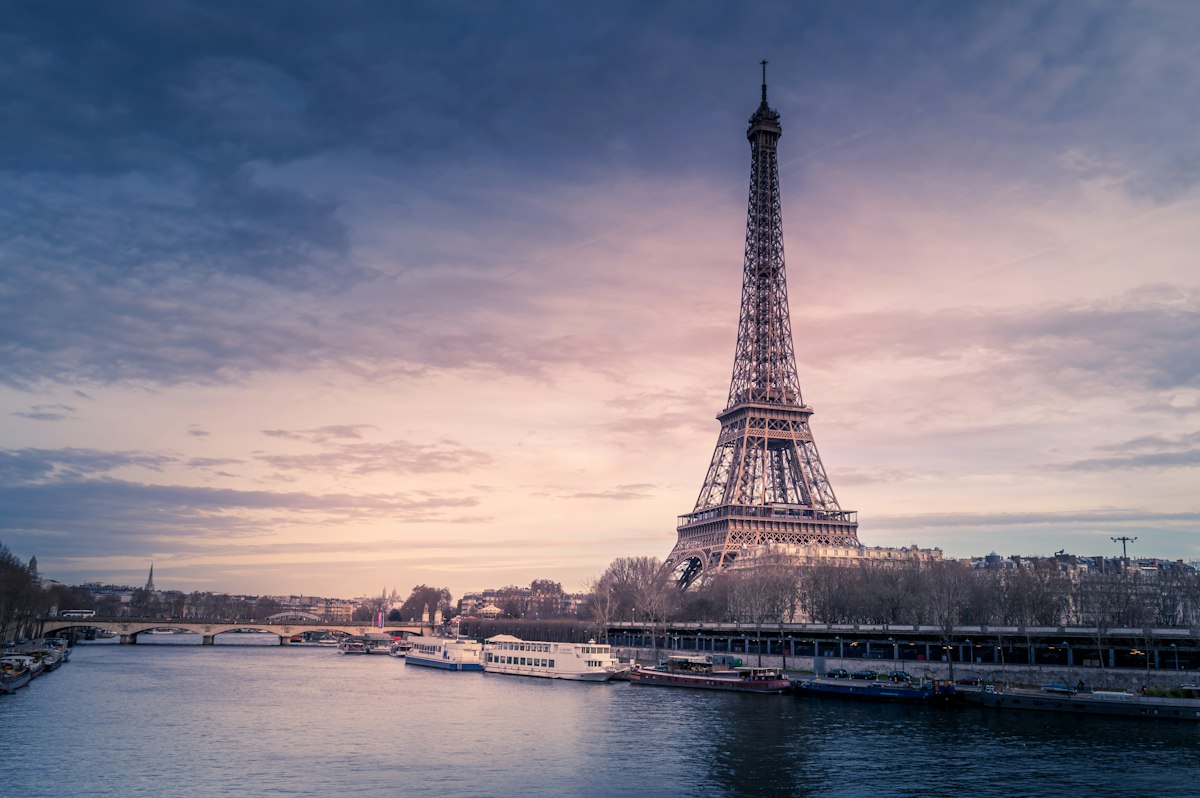
Destination Stories
The Places in Paris You Discover Only by Walking
Paris rewards those who slow down. The city's most memorable corners rarely appear on a hop-on bus route.
Mosam Shah · 10 January 2026 · 5 min read
Before You Travel
What Before You Travel Changes About a Journey
Preparation is not about packing lists. It is about arriving ready to recognise what matters.
Mosam Shah · 5 December 2025 · 5 min read